
Weird Plant Wednesday: Overlooked Liverworts
Welcome to Weird Plant Wednesday, a series of field notes about some of the bizarre plants of Alberta's boreal wetlands – plants that AJMers are privileged to see during summer field work in northern Alberta!
We’re finishing off this tour of the weird plants of Alberta’s boreal wetlands with liverworts. Heard of them? I hadn’t either until I started working in northern Alberta, but I’m becoming increasingly obsessed. Get out your microscopes and dichotomous keys, because liverworts might be the weirdest plants we’ve covered yet!
First of all, what are liverworts, and why on earth do they have such a weird name?
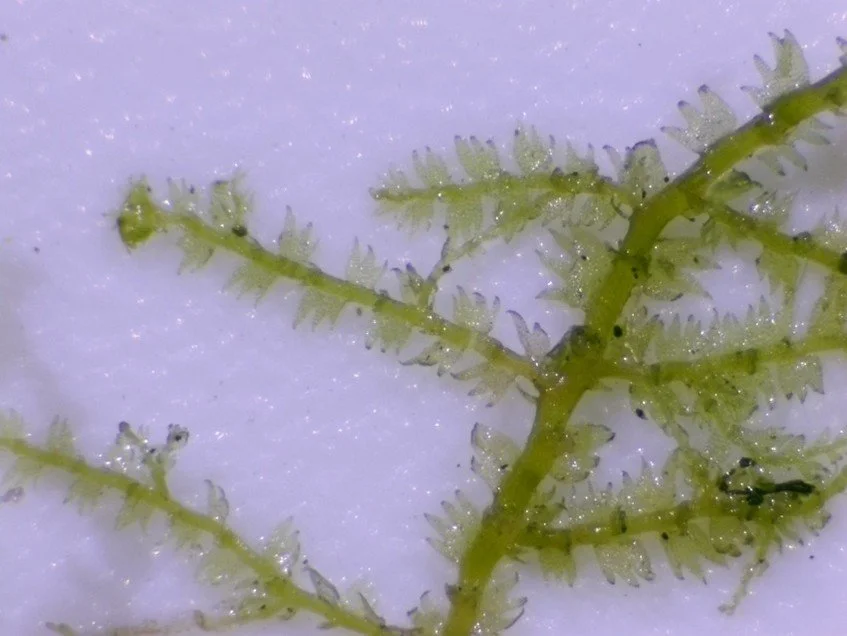
Creeping fingerwort (Lepidozia reptans) under a microscope.Liverworts are non-vascular plants (a.k.a. bryophytes), related to mosses. Like mosses, they lack roots as well as the specialized veinlike tissues that move water and nutrients through the stems and leaves of the more familiar vascular plants. The lack of these tissues means the plants are very small, because they have to rely on water diffusing directly into their cells to stay moist. They can’t draw water up a tall stem or trunk.
(I'm getting to the name, I promise.)
Liverworts come in two forms: thalloid and leafy. Thalloid liverworts have a flat, lobed structure called a thallus instead of a stem and leaves (weird). They form mats on the ground and individual plants can be a few centimetres across.
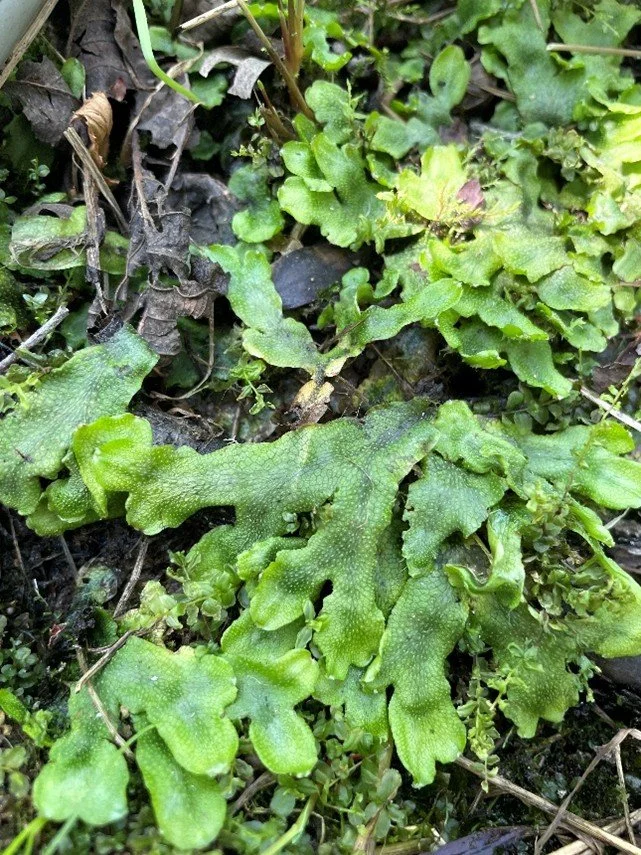
Cat-tongue liverwort (Conocephalum salebrosum), a type of thalloid liverwort.Leafy liverworts look very different – they have a stem with leaves that are often notched, lobed, or asymmetrical. And they're usually tiny – just a few centimetres long with millimetre-long leaves – mixed in with mosses in the undergrowth, and very, very easy to miss. Some of them have little hairs called cilia on the edges of their leaves (weird).
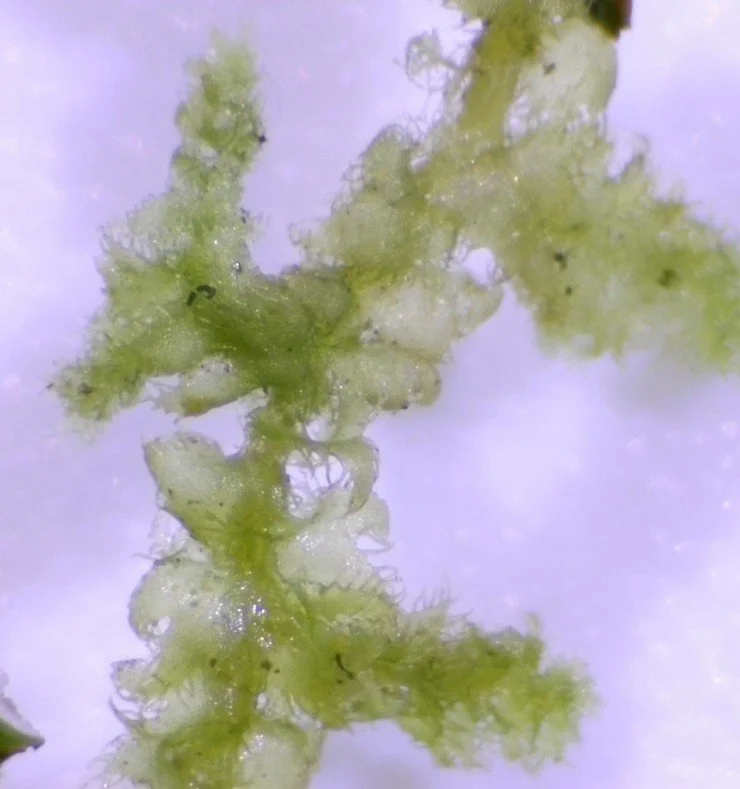
Ciliate fringewort (Ptilidium ciliare) under a microscope.Okay, now we can discuss the name. "Wort" is from an Old English word for plant. The "liver" part comes from the belief in early European cultures that some thalloid liverworts could treat liver diseases. The belief likely comes from the resemblance of thalloid liverworts to the lobed shape of a liver. Today, they are not known to have any medicinal effects. But at least ancient cultures appreciated them!
Liverworts don't grow from seeds, but from spores. This is not weird because it's the original mode of reproduction in plants – seed-bearing plants are the weird ones. But liverworts' reproductive structures are pretty weird! They can look like miniature cartoon palm trees or tiny salad bowls. (The "salad" is made of gemmae, small buds that pop out of the cups when hit by raindrops and grow into new plants wherever they land.)
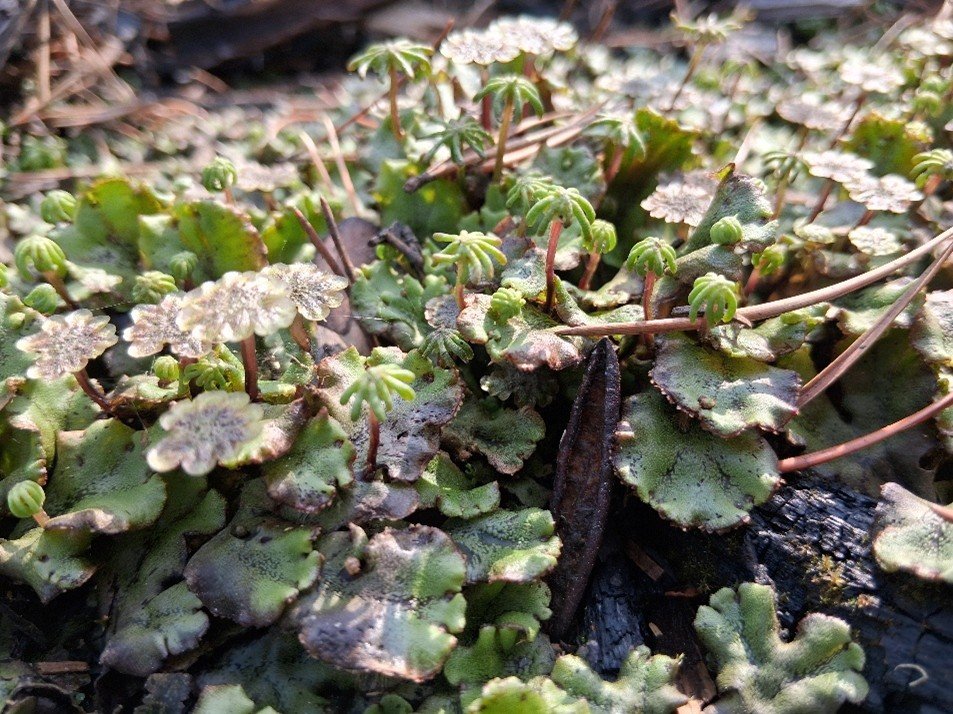
Marchantia polymorpha with palm-tree-like reproductive parts.Most liverworts don't have economic significance, and their ecological role is probably notable only to the microorganisms around them. One notable exception is Marchantia polymorpha, which can be one of the first plants to regrow after a fire, helping to stabilize and prepare the soil for other plants to regrow.
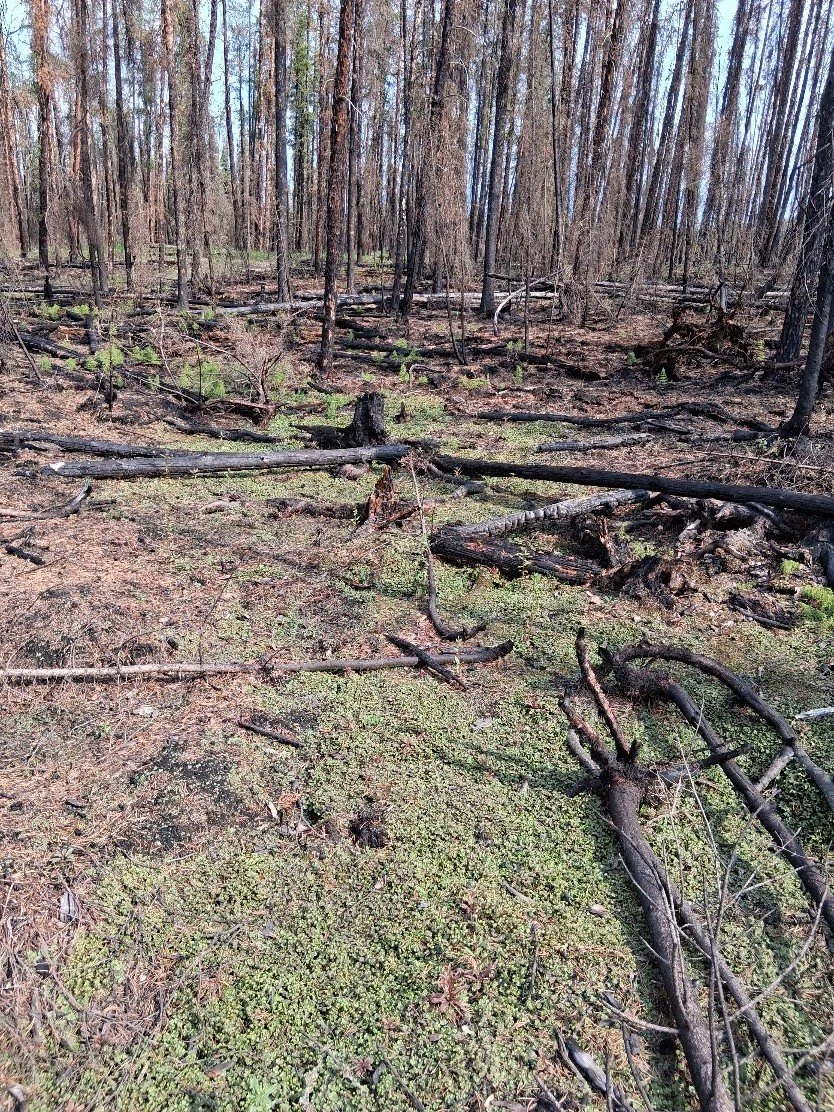
Marchantia polymorpha carpets the floor of a burned forest.The above lawn of liverworts aside, it's hard to overstate how easy it is to overlook liverworts. Even when you spot one, you'll likely need to examine it with a microscope to identify it. Very few people study them. None are protected species in Canada – and we probably wouldn't even know if any needed protecting because so few people are looking for them. So, consider this a plea to notice liverworts. Not because they're big and beautiful, and not because they're keystone species, but because they're little and weird, and you have to really look for them. You have to stop, bend down, and stare closely at a patch of green, and find the slightly different leafy green thing among the carpet of leafy greens. You have to notice the environment you're in in great detail. Call it mindfulness or nerdiness, but consider, when you stop to smell the roses, taking a look for liverworts too.
And if you smell turpentine instead of roses, that's just lesser crestwort (Lophocolea minor) or turps pouchwort (Geocalyx graveolens). Have I mentioned liverworts are weird?
Written By: Laura Southcott, MSc., PhD., PBiol., RPBio. - AJM Intermediate Biologist