
What Plants Are Telling You (If You Know How to Listen)
Every plant growing on a piece of land got there for a reason. It did not show up by accident. It is there because the soil, the moisture, the drainage, and the disturbance history of that site made it possible. Once you understand that, walking across a landscape starts to feel less like a nature stroll and more like reading a report that the land wrote about itself.
This is something AJM's vegetation crew thinks about constantly in the field. Here is a small window into how we read what plants are telling us.
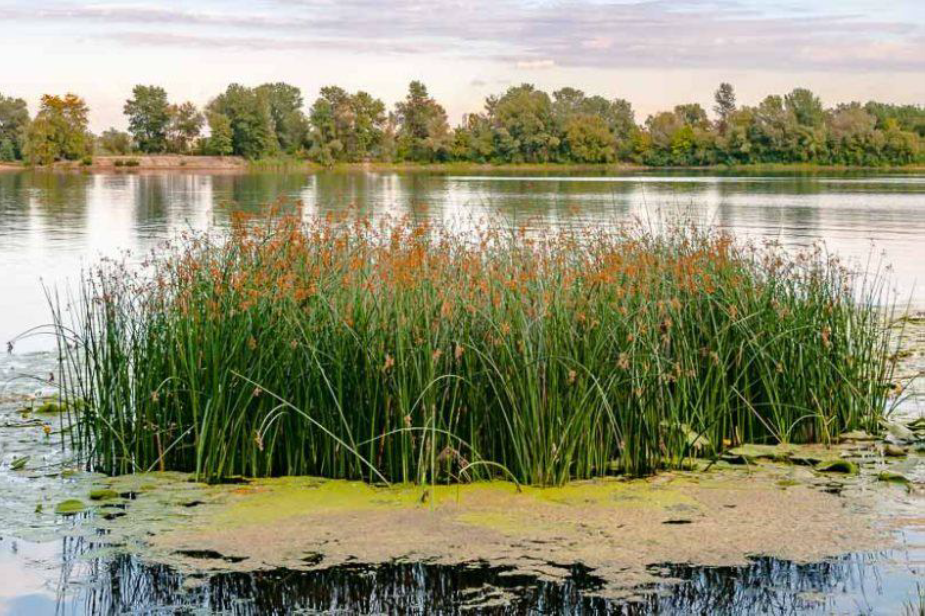
Bulrushes (Schoenoplectus spp.)
Plants as drainage detectors
One of the most useful things vegetation tells us is how water moves through a landscape. Certain plants thrive only in specific moisture conditions, and once you know what to look for, spotting a poorly drained area becomes almost instinctive.
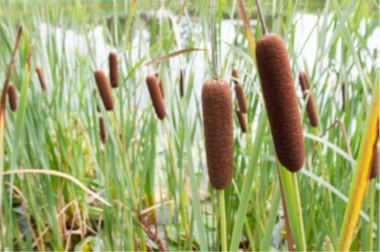
Cattails (Typha latifolia)
Cattails (Typha latifolia), with their tall distinctive brown seed heads, are one of the strongest indicators of standing water or saturated soils. You will find them at marsh edges, pond margins, and roadside ditches. Bulrushes (Schoenoplectus spp.) signal persistent shallow flooding with their stiff round stems and clustered spikelets. Willows (Salix spp.) line riparian areas and floodplains, their roots actively stabilizing banks along waterways. Peat moss (Sphagnum spp.) forms spongy mats in bogs and fens, and its presence tells you the soils are acidic, waterlogged, and poorly drained.
The flip side is equally readable. Bearberry (Arctostaphylos uva-ursi), that low-growing evergreen with the red berries, is a classic indicator of sandy, well-drained, elevated ground. Pasture sage (Artemisia frigida) with its silver-grey aromatic leaves turns up on dry grasslands and hilltops. Juniper (Juniperus spp.) thrives on rocky outcrops and dry slopes where drainage is rapid. Native fescue grasses (Festuca spp.) point to undisturbed, well-drained upland prairie.
If you are walking through sedges and willows, your boots are probably already wet. If you are standing on a ridge with bearberry underfoot and juniper nearby, you are on high, dry, well-drained ground. The plants told you that before you even pulled out a soil probe.
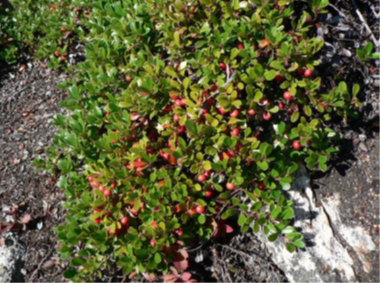
Bearberry (Arctostaphylos uva-ursi)
Plants as landscape historians
Vegetation does not just tell you about moisture. It tells you about what happened on a piece of land, sometimes centuries ago.
Plant communities shift at slope breaks, old terraces, and buried channels, features that are often invisible to the eye but show up clearly in how the vegetation changes. Where you see a sharp transition between plant communities, something is usually changing underfoot too, whether that is soil texture, drainage class, or the remnants of an old disturbance.
Invasive and weedy species are particularly useful disturbance signals. Non-native plants like Canada thistle (Cirsium arvense) or smooth brome often colonize disturbed ground. When you see a patch of invasives in an otherwise intact landscape, it is worth asking what disturbed that area and when. The vegetation is flagging something worth a closer look.
Even tree lines tell a story. Rows of trees or shrubs frequently follow old watercourses, drainage features, or historic land boundaries. What looks like a random cluster of shrubs from the road can, on closer inspection, be tracing the path of something that was there long before the current land use.
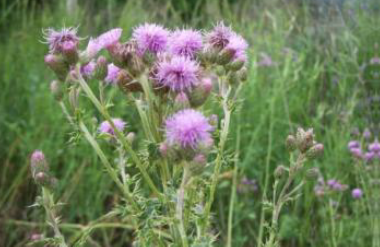
Canada thistle (Cirsium arvense)
Why any of this matters for your project
Reading vegetation is one of the most practical field skills in environmental work, and it has direct implications for project planning and regulatory compliance.
Alberta's Wetland Policy requires that wetlands be identified and assessed before development activities proceed. Vegetation is one of the three core indicators used in wetland delineation, alongside soils and hydrology. A stand of cattails or willows in a low-lying corner of a project site is not just a landscaping inconvenience. It is a data point that needs to be properly assessed before work begins.
The drainage class of a site, whether it is rapidly drained, well drained, moderately drained, or poorly drained, shapes what kind of development can happen there and what mitigation measures may be required. Understanding that early, before detailed engineering design is underway, gives you the most flexibility and the fewest surprises.
The plants were always there. They were always telling the story. Our job is to make sure someone is listening before the ground gets turned over.