
Weird Plant Wednesday: Strange Sphagnum
Welcome to Weird Plant Wednesday, a series of field notes about some of the bizarre plants of Alberta's boreal wetlands – plants that AJMers are privileged to see during summer field work in northern Alberta!
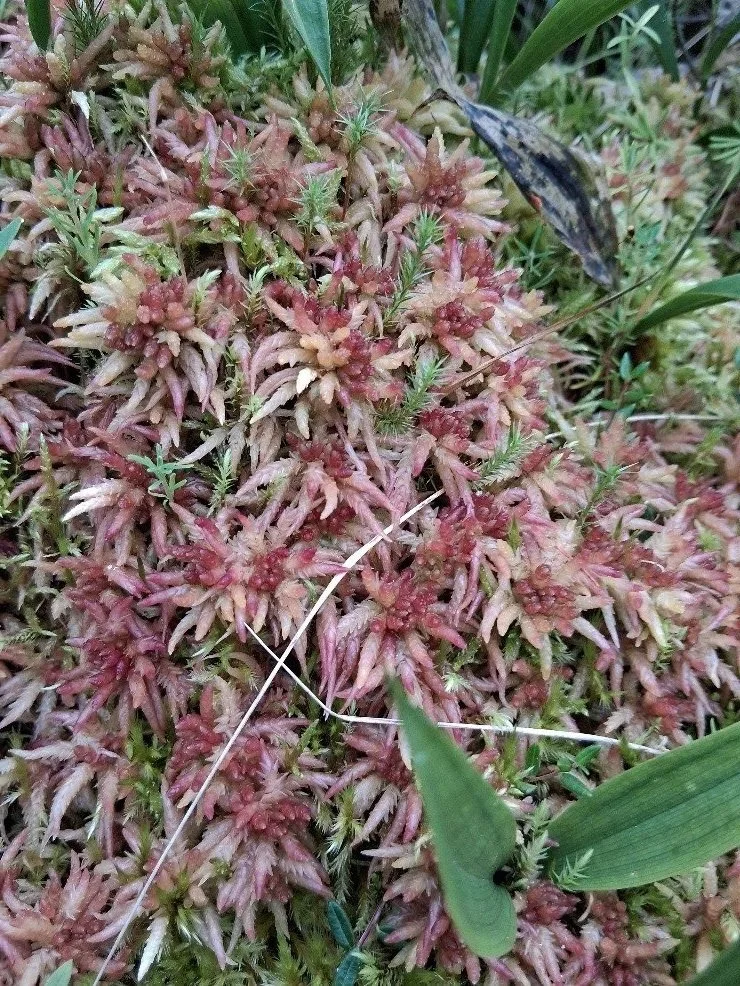
Sphagnum magellanicum
There's only one logical place to start this series, and it's the plants that literally help create Alberta's fens and bogs: peat mosses (genus Sphagnum).
Have you ever added peat moss to your garden or houseplant soil? That's Sphagnum, and it was likely harvested from a boreal wetland.
Peat is a thick layer of partly decomposed dead plants. It's formed when wetlands have nearly stagnant water and often acidic pH, which leads to conditions that make it hard for the bacteria and fungi that normally break down dead organic matter to thrive. Peatlands, also called muskeg in Canada from the Cree and Ojibwe words for this type of habitat, are bogs, fens, or swamps with a layer of peat at least 40 cm thick underlying them.
Peat can be composed of any plant matter, but we most often hear about peat moss. Mosses are central to peatlands, and Sphagnum in particular is an incredible architect of peat formation. We'll learn why shortly, but let's paint a picture first.
In peatlands, the ground is often carpeted with mosses – you might even say upholstered with them, as they form soft, thick, pillowy hammocks.
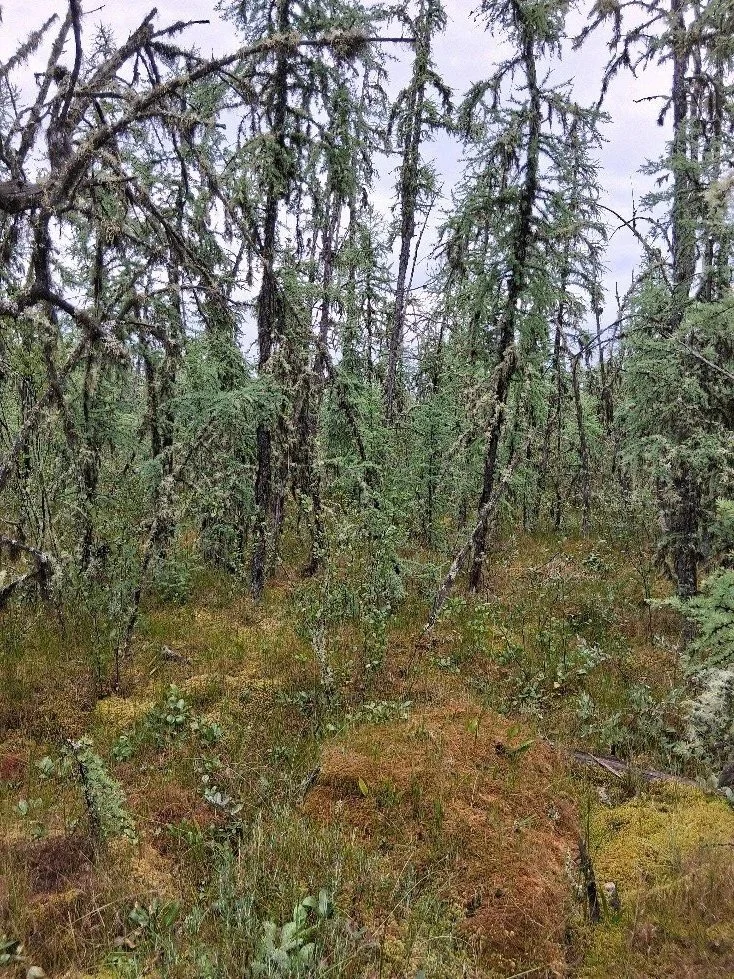
A plush carpet of peat moss in a forested fen.
Look closer and the hummocks resolve into thousands of starbursts of tiny branches. These are the tops, or capitula, of Sphagnum mosses. If you were to pull one out, which is quite easy because mosses lack roots, you'd find a stem underneath, about 10 cm long, with drooping branches hanging off it. Small leaves, hard to see without a hand lens, wrap the branches and stem tightly. The impression is of a jellyfish with long trailing tentacles.
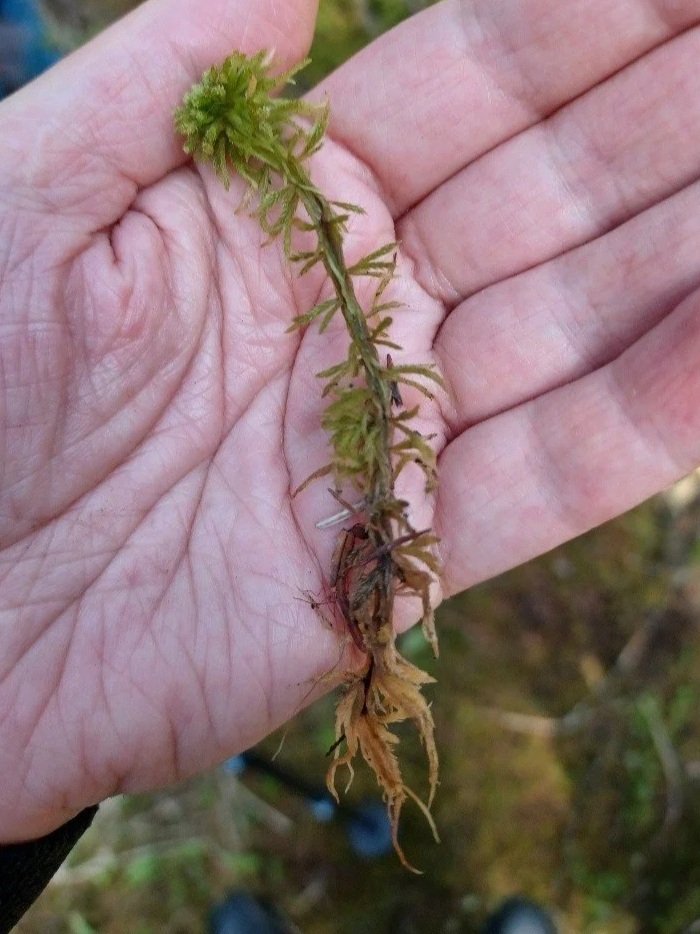
An individual Sphagnum wulfianum.
Before I talk about the ecological magic that Sphagnum casts, let's stop to enjoy my favourite thing about it: the colours. While Pantone has a "Sphagnum" colour that's predictably moss-green, you'll find few peat mosses know that's how they're supposed to look. S. fuscum is a vibrant copper growing in dense hummocks. S. warnstorfii varies from bright green in the shade to wine-red in full sun, a colour that my camera never quite manages to capture. Plants that get moderate sunlight can be green with pink highlights. S. squarrosum is a loose weave of lime green in ponded areas. The large and succulent-looking S. magellanicum also embraces the red end of the spectrum, with the paler outer branches contrasting with the burgundy at the centre.
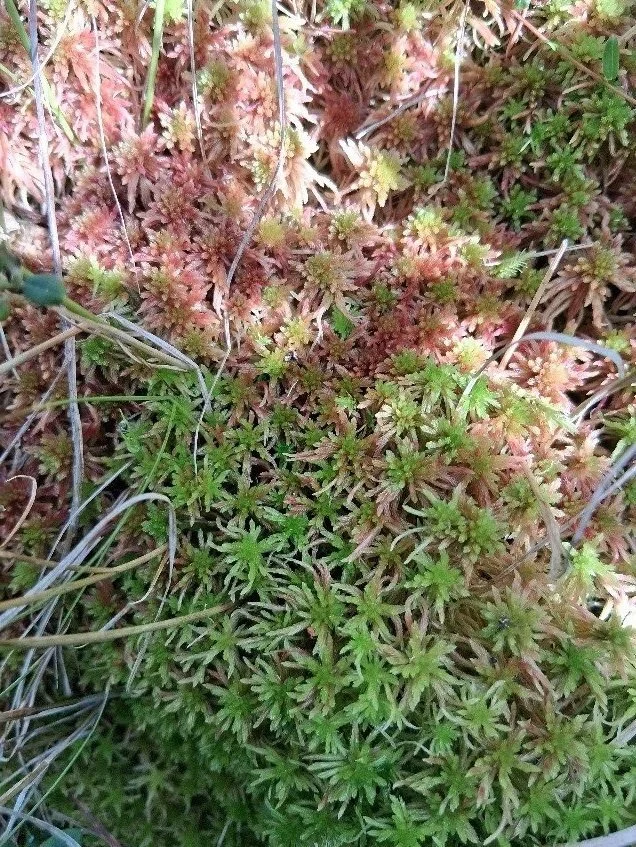
A pink to green colour gradient of Sphagnum warnstorfii
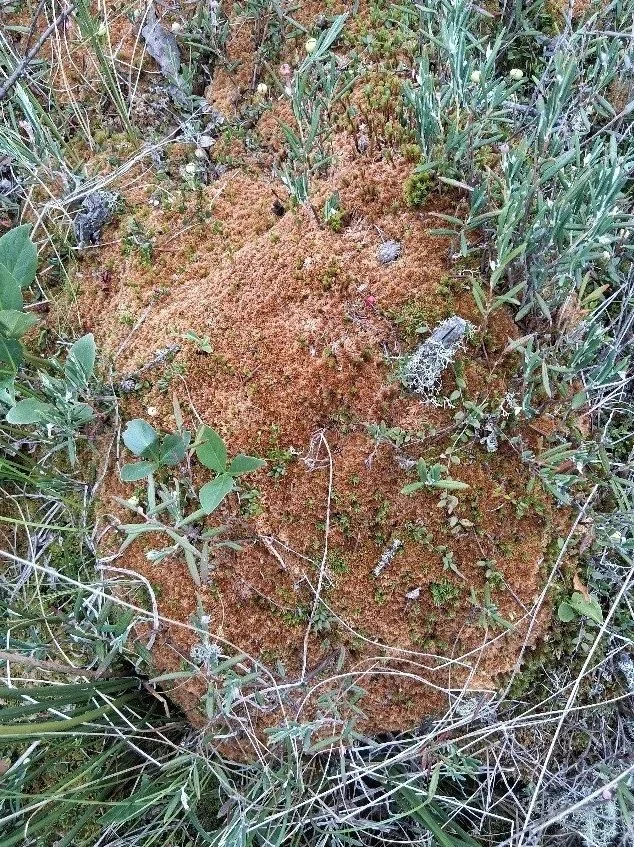
Sphagnum fuscum.
Let's look closer still, with a microscope: the leaves and branches contain a unique cell type, the hyaline cells, which are essentially empty spaces that can fill up with water. Sphagnum mosses have an incredible ability to absorb water and hold onto it, slowing down the movement of rain and groundwater across terrain. They also acidify the environment around them while absorbing minerals and nutrients from their surroundings. They essentially help create the environmental conditions they like to live in best.
On top of it all, they produce chemicals that make them difficult to digest or decompose. Slowing down decomposition means that carbon is trapped in the undecayed vegetation – this is why peatlands are considered carbon sinks: they take CO2 from the atmosphere as plants photosynthesize and store it after the plants die and don't decay. Nutrients like nitrogen and phosphorus are stuck in the undecayed plants as well. Both nitrogen and phosphorus are something plants can't do without – when our crops lack them we apply fertilizers – but in peatlands they are in extremely limited supply. This has some ramifications for all the other plants in the ecosystem, as we'll see in future editions of Weird Plant Wednesdays!
By: Laura Southcott, MSc., PhD., PBiol., RPBio. - AJM Intermediate Biologist